
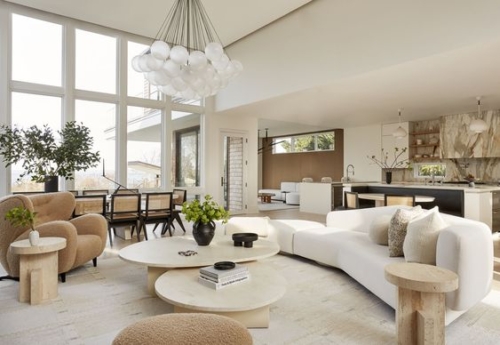
Key Takeaways
- Focus on Intention and Soul: Design is shifting away from strict rules toward spaces that feel comforting, intentional, and uniquely tailored to the individual.
- Warm Minimalism & Earthy Tones: Homeowners are replacing sterile whites with warm neutrals like oat, clay, and mushroom. They are also combining them with earthy hues like moss green, terracotta, and slate blue.
- The Fifth Wall: Ceilings are stepping into the spotlight as statement pieces using bold paint, wood slatting, vintage tin tiles, or murals.
- Sustainability as a Baseline: Eco-conscious choices—such as reclaimed wood, recycled materials, low-VOC paints, and upcycled vintage pieces—are central to modern spaces.
- Multifunctional Flexibility: With remote work continuing, home offices double as guest rooms, and furniture increasingly pulls double duty through smart storage and built-ins.
- Organic Shapes & Tech Integration: Curved lines and arched doorways replace boxy layouts, arched doorways, and natural flow, seamlessly paired with hidden smart home conveniences.
Interior design is about personal resonance over rigid rules. Today’s trends reflect a growing desire for spaces that feel intentional, comforting, and uniquely yours. Whether remodeling or refreshing a room, aim for personal harmony. Layer in texture, storytelling, and sustainability.
1. Warm Minimalism is the New Cool
Today’s minimalism brings warmth and personality. Today’s minimalism brings warmth and personality. Use soft neutrals like oat, clay, and mushroom. Pair them with natural woods, cozy textiles, and sculptural furniture. It’s minimalism with soul, where less doesn’t mean lifeless.
2. Statement Ceilings Make a Comeback
You heard that right. Ceilings are becoming the fifth wall again. Bold paint choices, natural wood slatting, vintage tin tiles, and mural-style artwork are turning heads—literally. It’s a subtle way to elevate a room without overwhelming the space.
3. Sustainable Design Isn’t a Buzzword—It’s a Baseline
Interior design today is grounded in environmental awareness. More designers and homeowners are choosing reclaimed wood, recycled materials, low-VOC paints, and sustainably produced furniture. Vintage and upcycled pieces are budget-friendly. They also act as conversation starters with a unique story.
4. Multifunctional Spaces are Non-Negotiable
Remote work is a long-term reality, so homes need flexibility. The home office now merges with guest bedrooms, dining areas transform into creative hubs, and homeowners expect furniture to pull double (or triple) duty. Custom built-ins, smart storage, and room dividers are essentials—not extras.
5. Earthy Tones & Bold Contrast
Color palettes are leaning into earth-inspired shades like moss green, terracotta, ochre, and slate blue. These grounded tones are paired with unexpected pops. High-contrast black detailing or metallic accents help keep things modern and dynamic.
6. Organic Shapes and Soft Edges
Designers are shifting away from boxy furniture to embrace curved forms that echo nature. Think of arched doorways, circular rugs, rounded coffee tables, and wavy mirrors. The result? A calming visual flow that feels more natural and inviting.
7. Tech-Integrated Living
Smart home features aren’t just convenient—they’re becoming central to modern interior design. From invisible speakers and under-cabinet lighting to app-controlled thermostats and window tints, seamless tech is being embedded into the home aesthetic more than ever.
Bringing It All Together
Whether you’re going for a full renovation or just swapping out decor, the best interior design is guided by authenticity and comfort. The future of home design isn’t about chasing trends—it’s about creating spaces that feel like you.
Ready to bring your vision to life? Let’s create a space that reflects your unique story. Schedule a consultation with us today to get started on your home transformation.
Frequently Asked Questions
What is "Warm Minimalism"?
Warm minimalism combines the clean, uncluttered aesthetic of traditional minimalism with cozy textures, natural wood finishes, and soft, inviting neutral palettes rather than cold, sterile whites.
How can I incorporate statement ceilings without overwhelming a room?
You can elevate your ceiling subtly without cluttering the room by using a coat of bold paint, adding natural wood slatting, or introducing subtle wallpaper and tin tiles.
Why is sustainable design trending?
Homeowners increasingly prioritize environmental awareness and authenticity. Reclaimed wood, vintage furniture, and eco-friendly materials not only reduce environmental impact but also bring unique stories and character to a home.
What are some easy ways to make a small space multifunctional?
Opt for versatile furniture that serves multiple purposes, utilize smart storage solutions, incorporate custom built-ins, and use stylish room dividers to carve out zones for working and relaxing.
Are angular and boxy furniture shapes out of style?
Not entirely, but there is a strong shift toward organic shapes, curved edges, circular rugs, rounded coffee tables, and arched doorways to create a softer, more calming visual flow.


