
Key Takeaways
- Evolution of the Kitchen: Modern kitchens are shifting beyond mere cooking spaces into multi-purpose zones for gathering, working, and relaxing.
- Islands as the Centerpiece: Multi-tiered or single islands with integrated seating seamlessly transition the kitchen from a food prep station into a dining room, bar, or workspace.
- Optimized Smart Storage: Utilizing open shelving, pull-out drawers, and custom cabinetry maximizes space, reduces clutter, and displays everyday items as decor.
- Warm & Natural Materials: Incorporating wood finishes, stone countertops, and neutral color palettes adds a timeless, cozy appeal that blends smoothly with open-concept layouts.
- Smart & Eco-Friendly Tech: Integrating smart appliances (such as recipe-syncing ovens or smart fridges) alongside energy-efficient materials boosts both convenience and sustainability.
Kitchen design has always been the heart of the home, but nowadays, it’s really stepping up to do a lot more for us. We don’t just cook in our kitchens anymore—we gather in them, get work done, and sometimes just kick back and unwind. Because of that shift, multi-purpose kitchens have become one of the go-to trends right now, all about keeping things functional, flexible, and looking great.
Islands with Integrated Seating
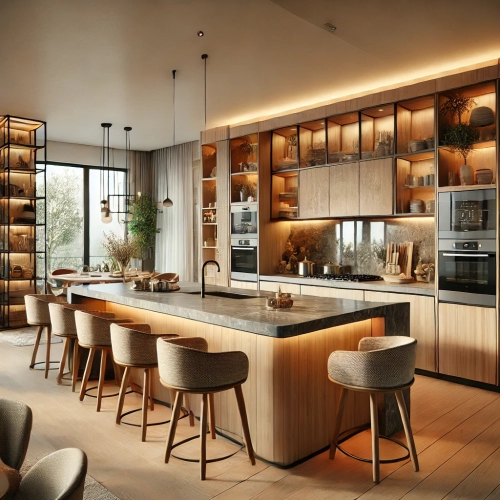
A hallmark of the multi-purpose kitchen is the island with integrated seating. This setup allows the kitchen to function as a dining room, bar, or workspace. An island can serve as a place to eat or work on a laptop. It is also great for catching up with family while preparing meals. Many designs now feature two-tiered islands, with one tier for cooking and the other for dining or working. This makes it easier to transition from meal prep to socializing.
Smart Storage Solutions
Smart storage solutions are essential in these kitchens. Open shelving, pull-out drawers, and custom cabinetry maximize space, providing easy access to essentials while reducing clutter. Open shelving makes the kitchen look more expansive. It also allows you to showcase cookware or dishes as part of the decor.
Warm and Natural Materials
When it comes to aesthetics, warm and natural materials are popular. Wood finishes, stone countertops, and neutral colors give kitchens a cozy and inviting feel, blending seamlessly with other parts of open-concept homes. These natural materials also have a timeless quality, ensuring that the kitchen remains stylish and functional for years to come.
The Integration of Smart Appliances
Another trend in kitchen design that is gaining traction is smart appliances. From fridges that can monitor expiration dates to ovens that sync with recipe apps, technology is making it easier to cook, organize, and entertain in the kitchen. Energy-efficient appliances are also key, reflecting a broader emphasis on sustainability. Multi-purpose kitchens are not just about efficiency; they’re designed to be eco-conscious, using materials and appliances that reduce environmental impact.
A Space That Adapts to You
Whether you’re entertaining guests, helping kids with homework, or working from home, the multi-purpose kitchen offers a space that adapts effortlessly. With thoughtful kitchen design, today’s kitchens can handle all the functions of a bustling household while remaining beautiful and inviting.
Ready to transform your kitchen into a functional, beautiful space tailored to your lifestyle? Schedule a consultation with Satin and Slate Interior Design today!
Frequently Asked Questions
1. What is a multi-purpose kitchen design?
A multi-purpose kitchen is a layout engineered to handle multiple household activities beyond cooking—such as dining, remote work, children’s homework, and entertaining—all within the same space.
2. How can I make my kitchen island more functional?
Incorporate integrated seating or consider a two-tiered island design. This separates the active cooking zone from the dining or laptop workspace, making it easier to socialize while prepping meals.
3. What materials are best for a modern, multi-purpose kitchen?
Warm and natural materials like wood finishes, stone countertops, and neutral tones are trending. They create an inviting, timeless atmosphere that flows well into open-concept living areas.
4. How do smart appliances enhance a kitchen?
Smart appliances improve efficiency by streamlining daily routines—ranging from refrigerators that monitor food expiration dates to ovens that sync directly with recipe applications.


